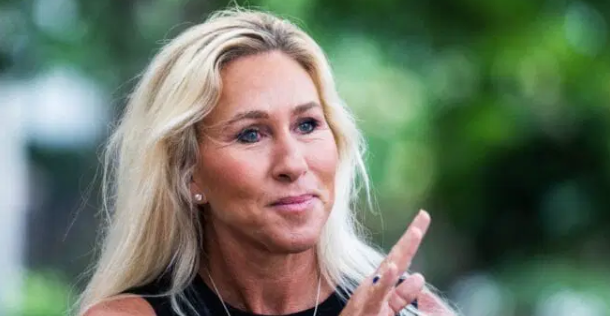
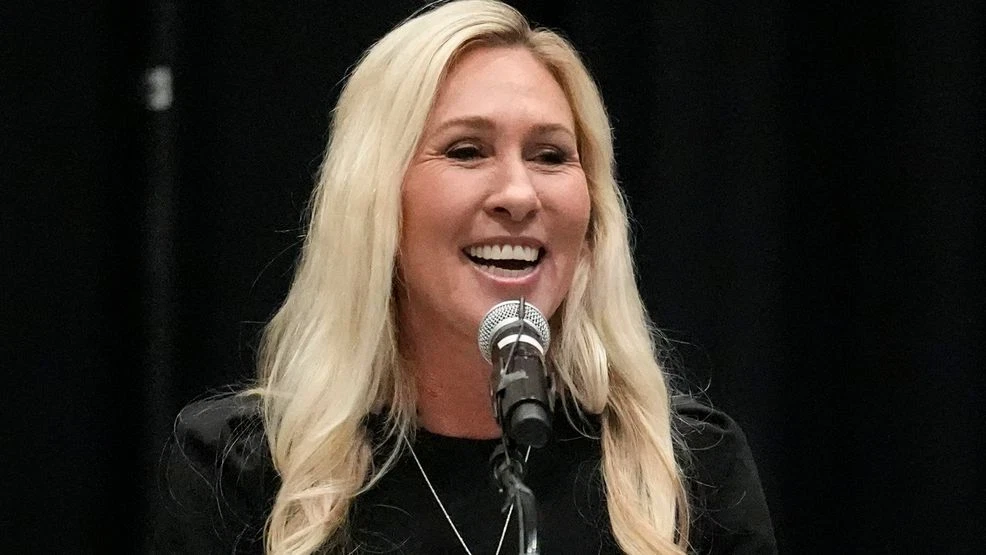
The run-off election in northwest Georgia to fill the congressional seat vacated by Marjorie Taylor Greene has now been decided. Greene, who had once been a close ally of former President Donald Trump but later became one of his critics, stepped down from her position in January after months of internal party conflict.
According to projections from VoteHub, Republican candidate Clay Fuller has emerged victorious over Democrat Shawn Harris in the run-off for Georgia’s 14th Congressional District. As is often the case with special elections—particularly run-off contests—voter turnout tends to be relatively low. Because of this, enthusiasm among supporters can play an outsized role in determining the final outcome compared to larger, general elections.
However, this race may not mark the end of the competition between Fuller and Harris. Both candidates are also set to appear on the ballot again in the upcoming general primary scheduled for May 19, alongside several other contenders who participated in the earlier special election held in March. This means the political battle in the district is likely to continue for some time.
Former President Donald Trump endorsed Fuller during the race, and Fuller’s win is expected to give House Speaker Mike Johnson a bit more breathing room within the Republican Party’s narrow majority in the House of Representatives. Fuller, who previously served as a prosecutor and is also a U.S. Air Force veteran, has consistently positioned himself as a strong supporter of Trump’s agenda. He has stated on multiple occasions that he intends to act as a “warrior” for Trump’s policies once in Congress. At the same time, several other Republican candidates in the race had also pledged strong loyalty to the former president, emphasizing similar commitments.
During the campaign, there was ongoing discussion about the need for a candidate who would actively fight for conservative policies rather than simply talk about them. In a radio interview on WLAQ in Rome, Georgia, one political voice emphasized that while many candidates claim to be staunch conservatives, not all follow through with meaningful action. The sentiment expressed was that the district needs someone willing to take a firm and energetic stand on key issues.
Georgia’s 14th Congressional District itself is geographically large and politically complex. It spans 10 counties, stretching from the outer suburbs of Atlanta all the way to the Appalachian foothills near the Tennessee border. Although it is widely considered a stronghold for Trump and the Republican Party, the district still includes a notable number of Democratic and independent voters. This demographic mix has the potential to create some uncertainty for Republicans, particularly in lower-turnout elections like special run-offs.
The backdrop to this election includes a highly publicized falling-out between Trump and Greene. Earlier in the year, just days before Greene officially left Congress, Trump openly criticized her during a rally in Rocky Mount, North Carolina. In his remarks, he referred to Greene as a “stone-cold liberal” and described her as “highly neurotic,” signaling a dramatic shift in their once-aligned political relationship.
Trump suggested that their relationship began to deteriorate over what he described as Greene’s frustration with his lack of communication. He claimed that she had grown upset because he did not return her phone calls frequently. Greene, for her part, had already been at odds with Republican leadership for months before her resignation. She had publicly voiced disagreements with members of her own party on several major issues, including economic concerns, healthcare policy, and the handling of matters related to the Epstein files.
Ultimately, Greene announced that she would step down from Congress to avoid what she characterized as a hostile and divisive primary challenge—one she believed would be backed by Trump. In response, Trump mocked her decision, even giving her the nickname “Marjorie Traitor Brown.” He joked about the name during his rally, suggesting that “green turns to brown under stress,” further underscoring the personal nature of their political split.
Trump also questioned Greene’s recent media appearances, noting that she had been featured on CNN and implying that this indicated a shift in her political stance. During his speech, he expressed disbelief at her actions, asking rhetorically what had happened to her.
Additionally, Trump defended himself against Greene’s complaints about communication. He explained that, as president, he had numerous responsibilities, including maintaining relationships with hundreds of members of Congress, dozens of senators, foreign leaders, and his own family. Because of these demands, he argued that it was unrealistic for any individual lawmaker to expect frequent, direct contact with him.
“You can’t call a president every single day,” Trump told the audience, suggesting that Greene’s expectations were unreasonable. He repeated his characterization of her as “highly neurotic” later in the speech and dismissed the idea that her resignation was an act of courage. Instead, he argued that true bravery would have meant staying in office and facing the political challenge head-on.
As of now, Greene has not issued any public response to Trump’s remarks, leaving the situation unresolved as the political landscape in Georgia’s 14th District continues to evolve.