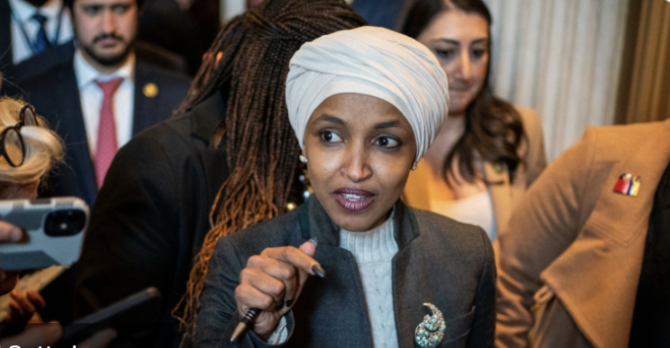
Democratic political strategist James Carville recently repeated his criticism of Ilhan Omar during a podcast appearance, once again suggesting that the progressive congresswoman might consider leaving the Democratic Party and pursuing her own political movement.
Carville made the remarks while appearing on the podcast Straight Shooter, hosted by sports commentator and media personality Stephen A. Smith. During the conversation, Smith asked Carville about comments he previously made in May 2025 on his podcast Politics War Room, where he had strongly criticized Omar, who is part of the progressive group of lawmakers commonly referred to as “the Squad.”
Carville, who gained national prominence as a political adviser to former U.S. President Bill Clinton, said his views have not changed since those earlier statements. He again questioned whether Omar’s political approach aligns with the broader goals of the Democratic Party.
His comments highlight ongoing disagreements within the Democratic Party about its ideological direction and the influence of progressive members of Congress.
“Lady, why don’t you just get out of the Democratic Party,” Carville said while referring to Omar. “Honestly, go start your own movement.”
Carville originally called for Omar to consider leaving the party after remarks she made in a 2018 interview with Al Jazeera. During that interview, Omar—who is married to a white man—said that the United States should be “more fearful of white men,” arguing that they were responsible for most deaths in the country. Critics argued that the comment was misleading or overly broad.
According to crime statistics released by the FBI and the U.S. Department of Justice in 2023, while white individuals account for the largest total number of homicide offenders in raw numbers due to population size, some statistics also show different victimization rates across demographic groups. These figures are often interpreted differently depending on the context in which they are presented.
Carville said that although Omar presents herself as “a very attractive and soft-spoken lady,” he disagreed strongly with her comments about white men and urged her to stop making such generalizations.
“About 33% of the people who are going to vote are white males,” Carville said. “So it’s just politically foolish to attack 33% of the voters.”
Carville continued by suggesting that Omar might consider formally aligning with organizations such as the Democratic Socialists of America. He referenced the political path of Alexandria Ocasio-Cortez, who is also associated with progressive politics and the broader “Squad” group in Congress.
He added that in a parliamentary-style system, different factions sometimes cooperate in governing coalitions even if they run separately during elections. According to Carville, such an arrangement might allow ideological allies to cooperate after elections while maintaining clearer distinctions during campaigns.
“I share a lot of ideological views with Congresswoman Omar,” Carville said. “But maybe the better model would be something like a parliamentary government where you’re part of the governing coalition, but not necessarily part of the electoral coalition.”
Carville also argued that Democrats cannot realistically win national elections without broad support from white voters, including white men.
“We have to get away from this mentality that we can win national elections without white voters,” he said. “The idea that we could somehow win an election without white males is simply unrealistic. It’s mathematically impossible.”
He added that he dislikes generalizing about any group based on race, gender, or sexual orientation.
“All white people are not the same. All Black people are not the same. All Hispanic people are not the same,” Carville said. “I don’t like making sweeping generalizations about someone’s gender, race, or sexual orientation. People are individuals with different personalities, beliefs, and values.”
Omar has also faced criticism for other controversial statements. In one instance, she wrote on the social media platform X that the United States appeared to target Muslim-majority countries during the Islamic holy month of Ramadan.
“Iraq was attacked by the U.S. during Ramadan, and it is disturbing to know that the U.S. might again attack Iran during Ramadan,” Omar wrote as tensions were rising before a potential U.S. strike on Iran.
She continued by saying that the United States “apparently loves to strike Muslim countries during Ramadan” and suggested that such actions might be influenced by religious bias rather than legal or geopolitical factors.
Critics quickly pushed back against the claim, arguing that the timing of military actions has historically been tied to strategic considerations rather than religious calendars. Some also said that statements like this, especially during periods of heightened geopolitical tension, could potentially be used by foreign adversaries as propaganda.
Despite the controversy, legal experts have emphasized that criticism of U.S. policy does not meet the constitutional definition of treason. Under the U.S. Constitution, treason is defined very narrowly and generally involves levying war against the United States or giving direct aid and comfort to its enemies.
Legal scholars have long explained that the “aid and comfort” standard requires clear intent and tangible support to an enemy, not simply controversial speech or criticism of government policy.
Democratic political strategist James Carville recently repeated his criticism of Ilhan Omar during a podcast appearance, once again suggesting that the progressive congresswoman might consider leaving the Democratic Party and pursuing her own political movement.
Carville made the remarks while appearing on the podcast Straight Shooter, hosted by sports commentator and media personality Stephen A. Smith. During the conversation, Smith asked Carville about comments he previously made in May 2025 on his podcast Politics War Room, where he had strongly criticized Omar, who is part of the progressive group of lawmakers commonly referred to as “the Squad.”
Carville, who gained national prominence as a political adviser to former U.S. President Bill Clinton, said his views have not changed since those earlier statements. He again questioned whether Omar’s political approach aligns with the broader goals of the Democratic Party.
His comments highlight ongoing disagreements within the Democratic Party about its ideological direction and the influence of progressive members of Congress.
“Lady, why don’t you just get out of the Democratic Party,” Carville said while referring to Omar. “Honestly, go start your own movement.”
Carville originally called for Omar to consider leaving the party after remarks she made in a 2018 interview with Al Jazeera. During that interview, Omar—who is married to a white man—said that the United States should be “more fearful of white men,” arguing that they were responsible for most deaths in the country. Critics argued that the comment was misleading or overly broad.
According to crime statistics released by the FBI and the U.S. Department of Justice in 2023, while white individuals account for the largest total number of homicide offenders in raw numbers due to population size, some statistics also show different victimization rates across demographic groups. These figures are often interpreted differently depending on the context in which they are presented.
Carville said that although Omar presents herself as “a very attractive and soft-spoken lady,” he disagreed strongly with her comments about white men and urged her to stop making such generalizations.
“About 33% of the people who are going to vote are white males,” Carville said. “So it’s just politically foolish to attack 33% of the voters.”
Carville continued by suggesting that Omar might consider formally aligning with organizations such as the Democratic Socialists of America. He referenced the political path of Alexandria Ocasio-Cortez, who is also associated with progressive politics and the broader “Squad” group in Congress.
He added that in a parliamentary-style system, different factions sometimes cooperate in governing coalitions even if they run separately during elections. According to Carville, such an arrangement might allow ideological allies to cooperate after elections while maintaining clearer distinctions during campaigns.
“I share a lot of ideological views with Congresswoman Omar,” Carville said. “But maybe the better model would be something like a parliamentary government where you’re part of the governing coalition, but not necessarily part of the electoral coalition.”
Carville also argued that Democrats cannot realistically win national elections without broad support from white voters, including white men.
“We have to get away from this mentality that we can win national elections without white voters,” he said. “The idea that we could somehow win an election without white males is simply unrealistic. It’s mathematically impossible.”
He added that he dislikes generalizing about any group based on race, gender, or sexual orientation.
“All white people are not the same. All Black people are not the same. All Hispanic people are not the same,” Carville said. “I don’t like making sweeping generalizations about someone’s gender, race, or sexual orientation. People are individuals with different personalities, beliefs, and values.”
Omar has also faced criticism for other controversial statements. In one instance, she wrote on the social media platform X that the United States appeared to target Muslim-majority countries during the Islamic holy month of Ramadan.
“Iraq was attacked by the U.S. during Ramadan, and it is disturbing to know that the U.S. might again attack Iran during Ramadan,” Omar wrote as tensions were rising before a potential U.S. strike on Iran.
She continued by saying that the United States “apparently loves to strike Muslim countries during Ramadan” and suggested that such actions might be influenced by religious bias rather than legal or geopolitical factors.
Critics quickly pushed back against the claim, arguing that the timing of military actions has historically been tied to strategic considerations rather than religious calendars. Some also said that statements like this, especially during periods of heightened geopolitical tension, could potentially be used by foreign adversaries as propaganda.
Despite the controversy, legal experts have emphasized that criticism of U.S. policy does not meet the constitutional definition of treason. Under the U.S. Constitution, treason is defined very narrowly and generally involves levying war against the United States or giving direct aid and comfort to its enemies.
Legal scholars have long explained that the “aid and comfort” standard requires clear intent and tangible support to an enemy, not simply controversial speech or criticism of government policy.