U.S. Senator Markwayne Mullin, a Republican from Oklahoma, has been confirmed by the U.S. Senate as the ninth Secretary of the Department of Homeland Security, following a 54–45 vote. His confirmation brings an end to the search for a successor to outgoing Secretary Kristi Noem, whose tenure had been marked by significant controversy.
Mullin’s appointment also closes the chapter on his 13-year career in Congress, which began in the House of Representatives before he was elected to the Senate in 2021. During his time in the Senate, Mullin developed a reputation as an informal bridge between the two chambers, often working to build cooperation and trust—particularly during last year’s effort to pass what lawmakers referred to as the “big, beautiful bill.” On the day of his confirmation, Mullin was accompanied by his family and expressed enthusiasm about casting his final vote as a senator—ironically, in support of his own nomination.
President Donald Trump nominated Mullin earlier in the month to lead the Department of Homeland Security. The confirmation vote largely followed party lines, although a few Democrats broke ranks. Senators Martin Heinrich and John Fetterman joined nearly all Republicans in supporting Mullin’s nomination.
Heinrich explained his decision by pointing to his working relationship with Mullin, noting that as co-chairs of the Senate Legislative Branch appropriations subcommittee, he had come to respect Mullin’s independence. Heinrich stated that Mullin is not someone who can easily be pressured into changing his views, adding that he looks forward to having a Homeland Security secretary who does not simply follow directives from White House adviser Stephen Miller.
Despite broad Republican support, Senator Rand Paul was the only member of his party to vote against Mullin. Paul cited their strained personal relationship and referenced Mullin’s past comments suggesting that a 2017 assault against him had been “justified” as reasons for his opposition.
Mullin’s confirmation comes at the end of a turbulent and tragic period for the Department of Homeland Security. The past month included the deaths of Renee Nicole Good and Alex Pretti, who were shot and killed by agents from Immigration and Customs Enforcement. Additionally, Noem was reassigned after facing intense scrutiny during two highly contentious hearings on Capitol Hill.
However, Mullin’s appointment and Noem’s departure have done little to shift the broader political dynamics in the Senate. Democrats have remained firm in their stance on immigration enforcement and DHS funding. They have repeatedly blocked Republican-led efforts to extend funding for the department on a temporary basis and have voted against funding for Immigration and Customs Enforcement five separate times. Many Democrats continue to push for sweeping reforms to the agency as a condition for future support.
Over the weekend, further complications emerged in efforts to resolve the ongoing government shutdown tied to DHS funding. Senate Minority Leader Chuck Schumer and Senate Majority Leader John Thune both described initial bipartisan discussions as “productive,” suggesting that progress might be possible.
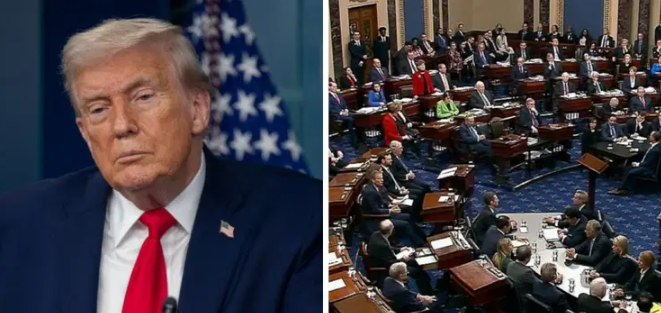
However, negotiations were disrupted after President Trump weighed in publicly on Sunday night through his Truth Social platform. In his post, Trump stated that Republicans should not agree to any deal with Democrats unless they support the SAVE America Act. He urged lawmakers to combine all legislative priorities into a single package, eliminate the filibuster if necessary, and remain in Washington, D.C., even through the Easter holiday to secure passage.
Trump’s comments appeared to complicate ongoing negotiations, particularly as Thune had previously suggested a different approach. Thune proposed separating funding for agencies like Customs and Border Protection and Immigration and Customs Enforcement from the broader DHS funding package, potentially using budget reconciliation to ensure their continued operation.
Adding to the uncertainty, many senators were absent over the weekend, making it more difficult to quickly reconvene and push forward negotiations. When asked whether he would consider canceling the Senate’s upcoming two-week recess, Thune responded cautiously, saying, “We’ll see.”
Before the confirmation vote, Trump met privately with a group of Senate Republicans to discuss strategy. Following the meeting, Senator Katie Britt described the discussion as productive and indicated that Republicans were actively working on a plan to prevent a prolonged shutdown.
Meanwhile, Democrats have remained united in their opposition to the Safeguarding American Voter Eligibility Act, commonly referred to as the SAVE Act. Schumer reiterated that Democrats are willing to continue negotiations, stating that they had planned to meet with immigration official Tom Homan but claimed the meeting was abruptly canceled by the White House.
Schumer criticized the administration, suggesting there was disorganization within the White House and attributing the breakdown in talks to what he described as President Trump’s impulsive approach. Despite these tensions, he emphasized that Democrats remain open to discussions aimed at resolving the funding impasse and avoiding further disruption to government operations.