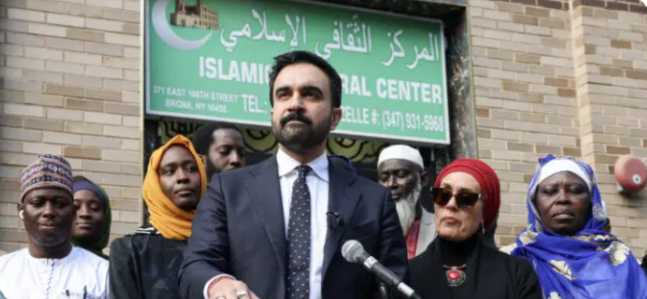
New York City Mayor Zohran Mamdani is beginning to scale back a major campaign promise related to affordable housing as the city grapples with a multibillion-dollar budget shortfall. His administration is currently appealing a court order that would require New York City to significantly expand its rent voucher program, a policy designed to help low-income residents afford housing but one that would come with substantial long-term costs.
At the same time, Mamdani has introduced a new initiative called the “Neighborhood Builders Fast Track” program, which aims to speed up the construction of affordable housing units on city-owned land. He announced the program at a site in the Bedford-Stuyvesant neighborhood of New York City, one of three locations selected for accelerated development. Additional sites have been identified in the Bronx and Queens as part of the broader plan.
Speaking at the announcement, Mamdani emphasized urgency, stating that residents can no longer afford delays when it comes to housing solutions. He explained that the program would establish a pre-qualified pool of developers and streamline approval processes, potentially reducing construction timelines by as much as two and a half years.
The affordability crisis is especially visible in neighborhoods like Bedford-Stuyvesant, where rents have risen dramatically over the past two decades. Reports indicate that median rent in the area increased by roughly 90 percent between 2006 and 2023, intensifying financial pressure on residents and contributing to the displacement of long-standing community members. While city officials maintain that addressing housing affordability remains a top priority, there is ongoing debate about what “affordable housing” truly means, as definitions vary depending on income levels and eligibility criteria.
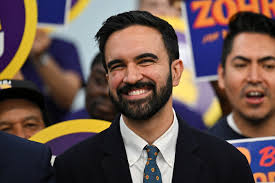
Local residents have expressed mixed reactions to the mayor’s plan. Some voiced concern that many new developments are not accessible to the people already living in the neighborhood, while others cautiously supported the idea of accelerating housing construction—provided the units are genuinely affordable. For many, the term “affordable housing” has become a point of frustration, as prices often remain out of reach for working-class individuals.
Despite unveiling the new construction initiative, Mamdani has faced criticism for continuing to oppose the expansion of the rent voucher program, which had previously been approved by the City Council. The legal challenge to that program began under former mayor Eric Adams, and Mamdani’s administration has maintained a similar position, arguing that the financial burden would be too great for the city to sustain over time.
According to city estimates, expanding the voucher program could cost more than $4 billion over the next several years. Mamdani has stated that while he remains committed to addressing homelessness and housing insecurity, he believes solutions must be financially sustainable not only in the short term but also over the long run.
Residents from across the city have been closely following the issue. One Bronx resident traveled to attend the announcement in hopes of hearing about potential rent relief, reflecting the widespread concern among everyday working people about rising housing costs and limited affordability.
The mayor has indicated that discussions surrounding the voucher program are still ongoing, even as the administration works to manage the city’s broader financial challenges. Mamdani inherited a budget deficit of approximately $12 billion and has reduced it to about $5.4 billion, though the city still faces significant fiscal pressure. He has also made clear that raising property taxes is an option he hopes to avoid, describing it as a last resort.
Critics argue that Mamdani’s decision to step back from expanding the voucher program represents a retreat from one of his central campaign promises. Supporters, however, contend that the move reflects the difficult balancing act required to govern a city facing serious budget constraints, where ambitious policy goals must be weighed against economic realities.
More broadly, Mamdani has begun to scale back several of his more ambitious campaign proposals as financial pressures mount. Among them is his earlier pledge to implement citywide free parking, which now appears unlikely to move forward. Instead, city officials are exploring alternative approaches, including converting some free parking spaces into metered ones or adopting dynamic pricing models that adjust rates based on demand.
First Deputy Mayor Dean Fuleihan has indicated that such measures are actively being considered as part of ongoing discussions about how to stabilize the city’s finances while maintaining essential services. Altogether, these developments highlight the challenges Mamdani faces as he attempts to reconcile campaign promises with the fiscal realities of governing one of the largest and most complex cities in the world.