California’s Democratic leadership is preparing to take legal action against the federal government following a Senate vote to overturn the state’s electric vehicle mandate. The dispute marks a significant escalation in tensions between state and federal authorities over environmental policy and regulatory power.
On Thursday, the Republican-led Senate voted to revoke several key waivers granted during the Biden administration, which had allowed California to establish its own, stricter vehicle emissions standards. According to CNN, the vote effectively nullified a late-stage approval from the Environmental Protection Agency (EPA) that permitted California to move forward with its plan to phase out the sale of new gas-powered vehicles by 2035.
California Governor Gavin Newsom strongly condemned the Senate’s decision, calling it both unlawful and a break from long-standing legislative norms. In a press release, he argued that Republicans bypassed their own procedural safeguards to achieve the outcome. Newsom also framed the issue as part of a broader environmental and economic struggle, warning that the move could reverse decades of progress in reducing air pollution—efforts that date back to administrations led by Richard Nixon and Ronald Reagan. He further suggested that weakening California’s emissions standards could harm the nation’s competitive position globally, particularly in relation to China.
Attorney General Rob Bonta echoed the governor’s criticism and confirmed that the state intends to challenge the decision in court. He accused Senate Republicans of misusing the Congressional Review Act as a political tool to undermine California’s environmental initiatives. Bonta described the action as part of an ongoing partisan effort targeting the state’s policies aimed at protecting public health and addressing climate change. He emphasized that California would not remain passive and would fight to preserve its authority to enforce stricter emissions standards.
Senator Adam Schiff of California also weighed in, warning that the Senate’s move could have broader institutional consequences. He argued that if the strategy used to overturn the waivers is allowed to stand, it could be repeated in other contexts, potentially weakening established legislative practices such as the filibuster. Schiff characterized the action as favoring fossil fuel interests at the expense of procedural integrity.
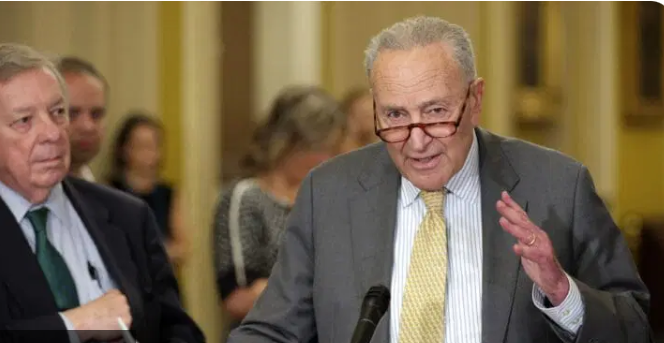
Senate Minority Leader Charles Schumer of New York expressed strong opposition as well, accusing Republicans of effectively dismantling long-standing Senate rules. Speaking to reporters, he described the move as “going nuclear,” referencing the decision to override the Senate parliamentarian. Schumer also cautioned that such actions could set a precedent that might later be used against Republicans themselves.
New Mexico Senator Martin Heinrich shared similar concerns prior to the vote, arguing that using congressional authority in this way could dramatically expand the scope of legislative intervention in agency decisions. He warned that such a precedent might allow Congress to overturn a wide range of regulatory actions across multiple sectors, potentially destabilizing the federal permitting and regulatory framework. Heinrich suggested that this could lead to increased uncertainty, higher energy costs, and delays in infrastructure and development projects nationwide.
Despite these criticisms, Republican leaders defended their actions and dismissed Democratic objections. Senate Majority Leader John Thune of South Dakota pointed out that many Democrats had previously supported efforts to eliminate the legislative filibuster, arguing that their current outrage was inconsistent. He characterized the issue as a limited and technical dispute over who has the authority to define regulatory rules—whether it should rest with agencies like the Government Accountability Office or with elected officials in Congress and the administration.
Senate Majority Whip John Barrasso of Wyoming was particularly critical of California’s electric vehicle targets, describing them as unrealistic and potentially harmful to key economic sectors such as agriculture and ranching. He argued that the mandates would restrict consumer choice by effectively banning the sale of gas-powered vehicles. Barrasso also highlighted current market data, noting that electric vehicles account for a relatively small share of total U.S. car sales—approximately 7% nationwide and about 20% in California—and claimed that growth in the sector has begun to slow.
He further criticized the state’s timeline, pointing out that California aims for 35% of new vehicle sales to be electric by 2026, a target he described as overly aggressive given current trends. The requirement would then increase to a full transition—100% electric vehicle sales—by 2035, a goal that Republicans argue is impractical under existing market and infrastructure conditions.
Overall, the situation underscores a deep and ongoing divide between Democrats and Republicans over environmental policy, states’ rights, and the role of federal oversight. With California now preparing to challenge the Senate’s decision in court, the conflict is likely to continue unfolding in both legal and political arenas, potentially shaping the future of U.S. climate policy and regulatory authority.