President Donald Trump is moving forward with a series of new measures aimed at tightening restrictions on non-citizens’ access to the American financial system as part of his administration’s broader crackdown on immigration and financial fraud.
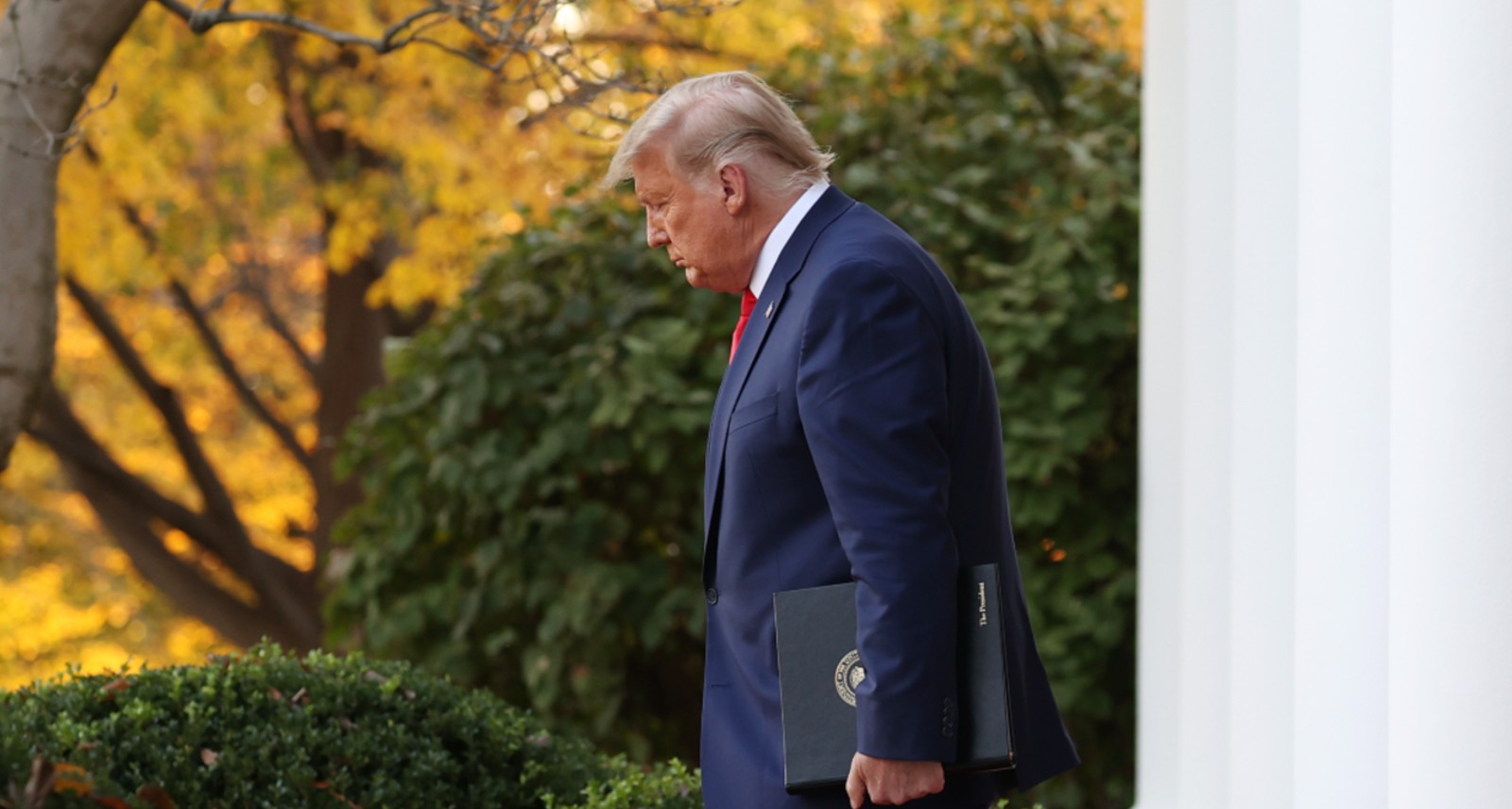
On Tuesday, Trump signed a new executive order titled “Restoring Integrity to America’s Financial System,” which directs banks and financial institutions to take a customer’s immigration status into account when evaluating potential financial and regulatory risks. The order is being presented by the administration as part of a larger effort to strengthen national security, combat financial crime, and prevent abuse of the U.S. banking system.
Under the authority of the 1970 Bank Secrecy Act, the executive order instructs the Treasury Secretary and federal financial regulators to provide updated guidance to banks on how to identify customers whose activities or financial profiles could indicate suspicious conduct, including money laundering, labor trafficking, terrorism financing, and other forms of organized criminal activity.
According to the order, one of the main goals is to address what the administration describes as “potential threats to the integrity of the United States financial system posed by foreign consular identification cards.” Administration officials argue that weaknesses in identity verification procedures have created opportunities for criminal networks to exploit U.S. financial institutions.
The order outlines a number of “red flags and typologies” that financial institutions should monitor more closely. Among the examples listed are repeated cash withdrawals structured to avoid reporting requirements, the use of shell companies to disguise true account ownership, suspicious wire transfers, and the use of certain digital payment platforms for undocumented or “off-the-books” wage payments.
Another major focus of the order involves the use of Individual Taxpayer Identification Numbers, commonly known as ITINs. The administration specifically identified the use of an ITIN in place of a Social Security number during account openings or banking transactions as a potential indicator requiring additional scrutiny.
ITINs are issued by the Internal Revenue Service and are available to individuals regardless of immigration status for the purpose of filing and paying taxes. Millions of non-citizens, including undocumented immigrants, use ITINs legally every year to comply with federal tax laws. Critics of the executive order argue that treating ITIN usage as a financial “red flag” could make it significantly more difficult for immigrants to access basic banking services even when they are acting lawfully.
Financial advocates and immigration groups have warned that the new rules could discourage non-citizens from opening bank accounts, obtaining mortgages, applying for loans, or engaging with regulated financial institutions altogether. Some experts fear that stricter scrutiny could push vulnerable communities further into cash-based or unregulated financial systems.
The executive order comes as the Trump administration continues implementing an aggressive immigration agenda that has included increased deportations, expanded workplace raids, tighter asylum policies, heightened visa screening procedures, and stricter standards for citizenship applications. The administration has also limited immigrant access to several public benefit programs and increased enforcement actions involving both undocumented individuals and some lawful immigrants.
Large-scale immigration operations carried out by federal authorities have already sparked protests in multiple cities across the country. Critics argue that the administration’s policies are creating fear within immigrant communities and increasing tensions nationwide.
In addition to the banking order, the Treasury Department announced earlier this year that it is considering reclassifying certain refundable tax credits as “federal public benefits.” If implemented, the change could restrict eligibility for some non-citizens who currently pay taxes in the United States using ITINs.
The White House defended the executive order in an official fact sheet, arguing that the administration is taking necessary action to restore public trust in the financial system and protect Americans from financial crimes.
“President Trump is taking action to restore integrity to America’s financial system, cracking down on illicit activity that threatens national security and ending the extension of credit to high-risk borrowers that American citizens are forced to subsidize,” the White House stated.
The administration further argued that “restoring sound underwriting standards puts money back in the pockets of law-abiding Americans” by reducing risks that could eventually increase banking costs for ordinary consumers.
The White House also claimed that gaps in customer identification standards have allowed drug cartels, money launderers, terrorist organizations, and foreign criminal networks to move illicit funds through American banks while avoiding law enforcement detection. Administration officials specifically referenced documented Chinese-linked money laundering operations as examples of why stricter oversight is necessary.
In defending the policy changes, the administration pointed to instances in which banks allegedly extended mortgages, credit cards, and other forms of credit to undocumented immigrants. Officials also cited cases of employers underreporting wages paid to undocumented workers, arguing that the resulting financial risks and losses are ultimately passed on to American consumers through higher fees and interest rates.
However, many economists dispute the idea that immigration-related lending is a major driver of higher borrowing costs. Financial experts generally attribute rising interest rates to broader economic conditions such as Federal Reserve benchmark rate decisions, inflation management, bank funding costs, and individual borrower credit histories.
Research from the Urban Institute found that lenders issued approximately 5,000 to 6,000 mortgages annually to borrowers using ITINs. While relatively uncommon, ITIN-based lending has existed for years within certain community banking and credit markets.
Banks have traditionally been cautious about offering financial products to customers using ITINs, and government-backed mortgage giants Fannie Mae and Freddie Mac generally avoid insuring loans tied to ITIN borrowers.
The executive order also directs the Treasury Department to explore additional regulatory changes under the Bank Secrecy Act that would make it easier for financial institutions to collect and verify customer information, including immigration status, employment authorization, and related documentation.
At the same time, Trump has continued accusing major financial institutions of discriminating against conservatives. He previously filed a $5 billion lawsuit against JPMorgan Chase and its CEO after his accounts were reportedly closed following the January 6, 2021 Capitol riot.
In response, JPMorgan Chase stated earlier this year that the company does not close customer accounts for political or religious reasons. Instead, the bank said account closures occur when relationships create legal or regulatory risks for the institution.
“Our company does not close accounts for political or religious reasons,” JPMorgan said in a statement. “We do close accounts because they create legal or regulatory risk for the company. We regret having to do so, but often rules and regulatory expectations lead us to do so.”
Meanwhile, even as the administration pushes stricter regulations on traditional banking oversight tied to immigration enforcement, the White House has simultaneously embraced a broader deregulatory approach toward emerging financial technologies. Trump has repeatedly promoted cryptocurrency and pledged to make the United States the “crypto capital of the planet,” while encouraging investment and innovation outside the traditional banking sector.
The combination of stricter immigration-linked financial scrutiny and broader financial deregulation reflects the administration’s wider economic and political strategy heading into the next election cycle, as debates over immigration, banking access, national security, and financial privacy continue intensifying across the country.