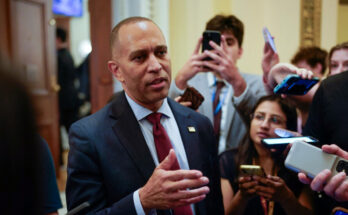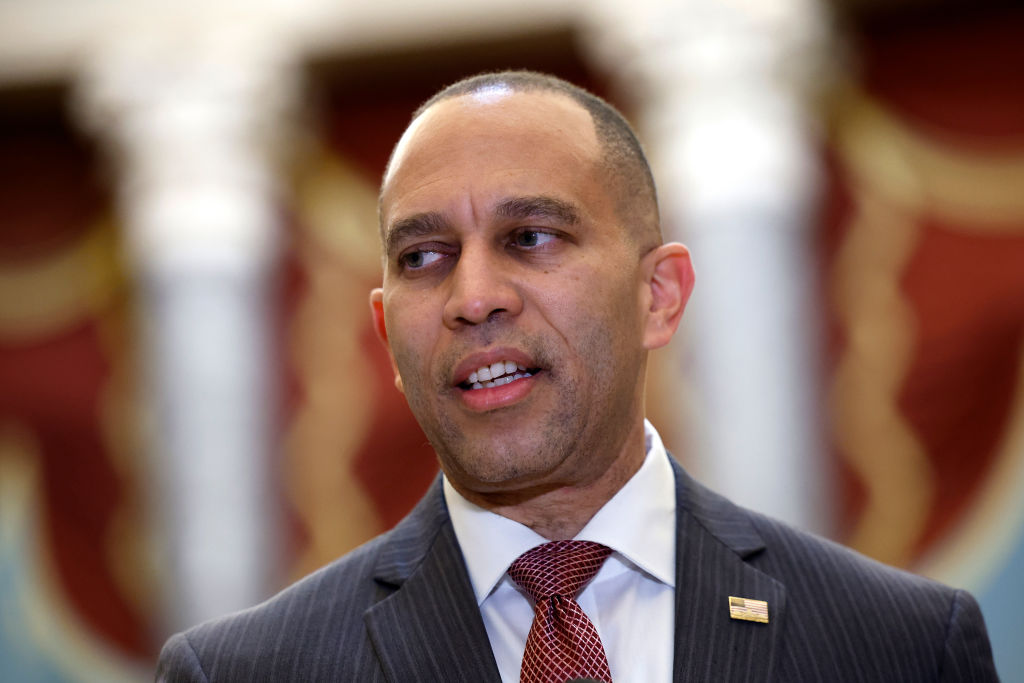
House Democratic Leader Hakeem Jeffries is facing increasing criticism after the Virginia Supreme Court struck down the state’s newly approved congressional map, dealing Democrats a major political and legal setback in one of the country’s most closely watched redistricting battles.
The controversy escalated after conservatives revived previous comments made by Jeffries while he was aggressively defending the now-invalidated maps. Democrats had viewed the Virginia effort as a key opportunity to dramatically reshape the state’s congressional delegation and potentially strengthen their chances of reclaiming control of the U.S. House in the 2026 midterm elections.
Earlier this month, the Virginia Supreme Court issued a narrow 4-3 ruling invalidating the voter-approved congressional maps after determining that Democratic lawmakers violated procedural requirements outlined in the state constitution during the referendum process. The decision immediately halted implementation of the maps and forced Virginia officials back to the drawing board ahead of the next election cycle.
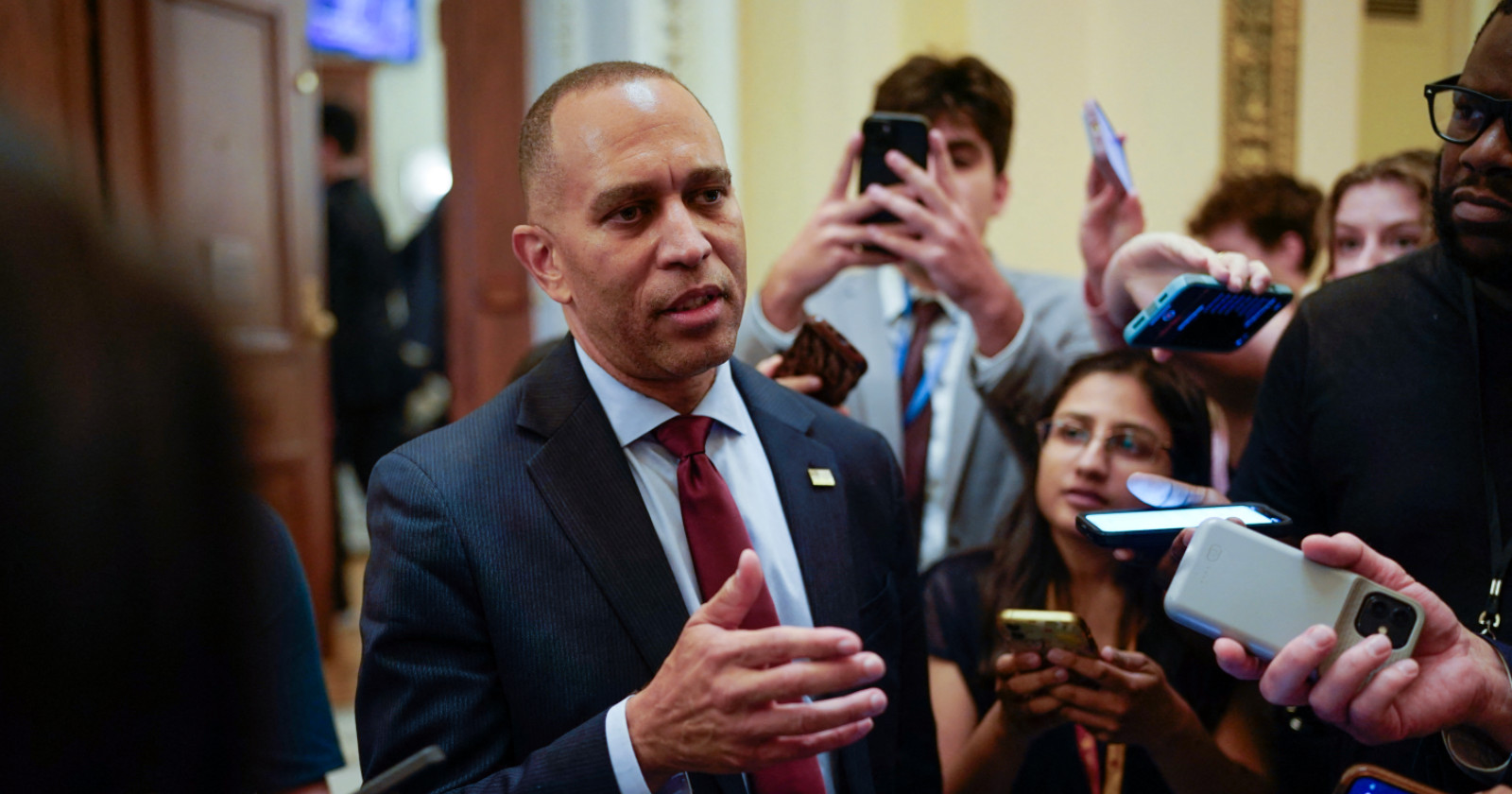
The ruling erased what Democrats had hoped would become a major political advantage. Under the proposed maps, Virginia’s congressional delegation could have shifted toward a heavily Democratic 10-1 split, dramatically altering the balance of power in a key battleground state. Instead, the court’s decision marked a serious defeat for Democrats in the broader national redistricting war now unfolding between Republican- and Democratic-controlled states across the country.
Before the court intervened, Jeffries had confidently defended the legality of the effort and repeatedly insisted Democrats were operating within constitutional boundaries.
“The law is with us in Virginia,” Jeffries previously declared while campaigning in support of the redistricting proposal and encouraging Democratic activists to view the state as central to the national fight for congressional control.
Following the Supreme Court ruling, however, Republicans quickly seized on the statement, arguing that Democratic leaders had badly miscalculated both politically and legally. Conservatives accused Jeffries and other Democratic officials of overreaching in an attempt to secure a massive partisan advantage through aggressive redistricting tactics.
After the maps were invalidated, Jeffries responded with a sharply worded statement condemning the court’s ruling and accusing the justices of overturning the will of Virginia voters.
“Over three million Virginia citizens cast their votes in a free and fair election, yet the State Supreme Court has chosen to invalidate their voice, disenfranchise them and violate their due process rights,” Jeffries said shortly after the decision was announced.
“The decision to overturn an entire election is an unprecedented and undemocratic action that cannot stand,” he added.
Jeffries also attempted to connect the Virginia ruling to broader Democratic criticisms of the judiciary and recent decisions involving voting rights and congressional districting nationwide. He accused what he described as “far-right extremists” on the U.S. Supreme Court of weakening protections under the Voting Rights Act and enabling attacks on minority representation throughout several Southern states.
“We are exploring all options to overturn this shocking decision,” Jeffries said at the time. “No matter what it takes, House Democrats will win in November so we can help rescue this nation from the extremism being unleashed by Donald Trump and Republicans.”
Republicans immediately criticized the remarks, arguing that Democrats were lashing out after a politically ambitious strategy collapsed under judicial scrutiny. Conservative commentators noted that Virginia Republicans had warned for months that the referendum process contained constitutional problems and repeatedly pushed for earlier judicial review before the election occurred.
Despite those warnings, Democrats continued moving forward with the effort, apparently confident the maps would survive any legal challenges. The Virginia Supreme Court ultimately ruled otherwise, delivering a major blow to Democratic redistricting plans.
Critics also pointed to what they described as irony in Democrats suddenly appealing to the courts after years spent attacking the Supreme Court and discussing structural reforms to the federal judiciary. Republicans argued that Democratic leaders were willing to praise or condemn judicial institutions depending on whether court rulings benefited their political goals.
The failed Virginia redistricting effort quickly became one of the most expensive and politically significant map fights in the nation. Reports estimate that Democrats and allied outside organizations spent nearly $70 million supporting the referendum campaign, advertising efforts, legal work, and voter outreach tied to the proposed maps before the court invalidated the entire process.
The defeat also exposed growing internal disagreements within the Democratic Party regarding redistricting strategy. Some Democratic officials continue arguing that aggressive map-drawing is necessary to counter Republican-led states that have redrawn congressional boundaries in ways that strengthen GOP control.
Others within the party, however, privately questioned whether Virginia Democrats ignored clear legal risks while pursuing what critics described as an overly ambitious political power grab. Some strategists reportedly worry the failed effort consumed valuable financial resources at a time when Democrats already face a significant fundraising disadvantage against Republicans ahead of the midterms.
The Virginia case is unfolding amid a much larger national redistricting battle that has intensified rapidly heading into the 2026 elections. Republican-controlled states including Texas, Florida, Ohio, Missouri, Tennessee, and North Carolina are all expected to pursue revised congressional maps that could strengthen Republican advantages in future elections.
Meanwhile, Democrats have explored redistricting opportunities in states such as California and Utah as both parties prepare for another fierce nationwide battle over congressional representation.
Current Republican projections suggest the GOP could potentially gain as many as 14 additional House seats through ongoing redistricting efforts nationwide, while Democrats believe they may secure roughly six additional seats from their own map changes.
As a result, the Virginia ruling is being viewed as far more than a single state-level legal dispute. Political analysts from both parties believe the outcome could influence redistricting strategies across the country and shape how aggressively lawmakers pursue partisan map changes moving forward.
The fallout continues to spread through Democratic political circles as party leaders debate whether future redistricting efforts should be approached more cautiously or whether aggressive map battles remain necessary to compete with Republican-controlled legislatures.
With control of the House expected to depend on only a handful of competitive districts in 2026, the Virginia decision has become one of the defining early battles in what is already shaping up to be an intense and expensive fight for congressional power nationwide.