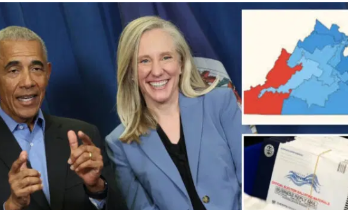
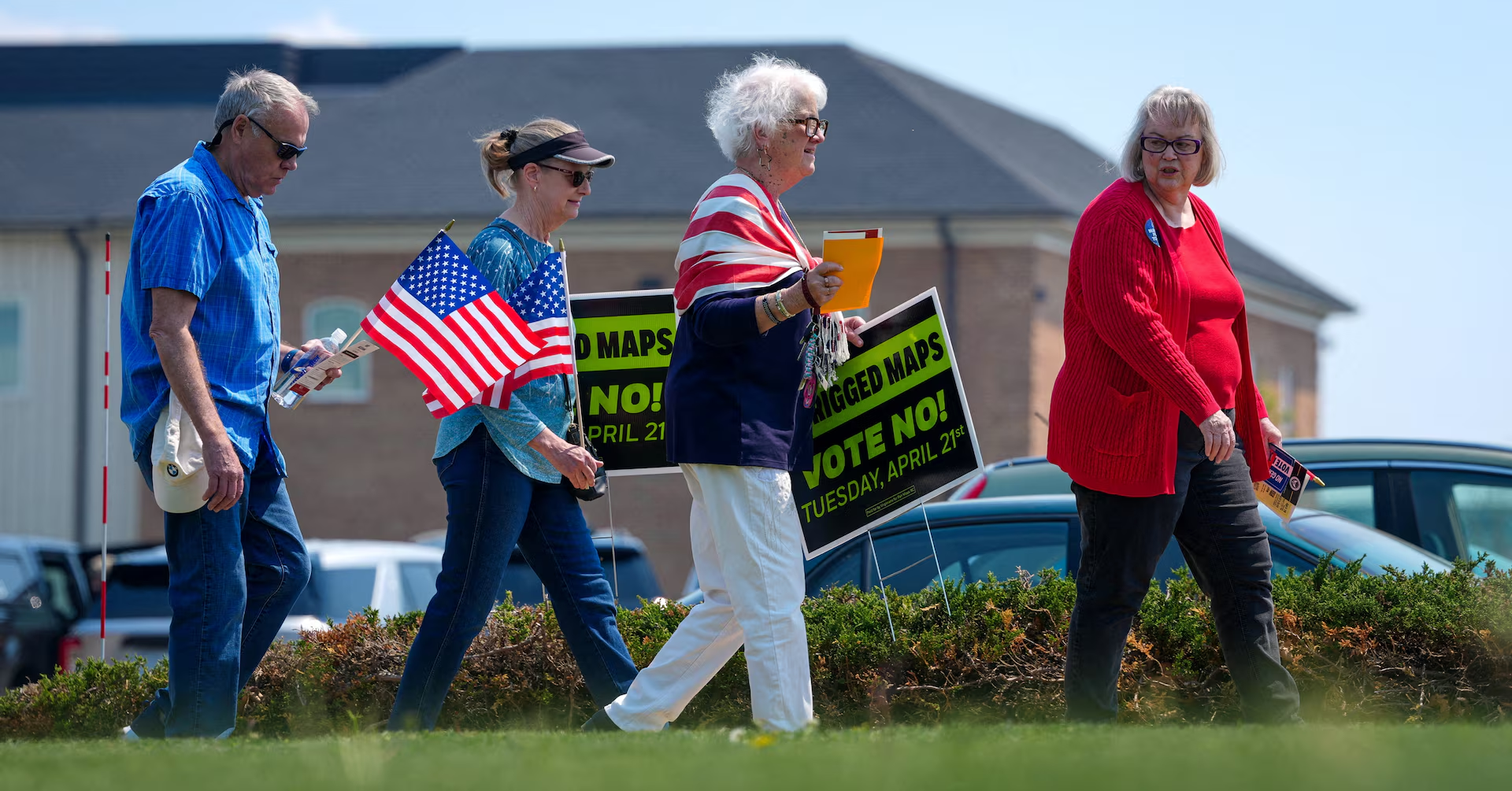
A congressional redistricting map approved by voters in Virginia is now facing an immediate and significant legal challenge after a judge moved to block certification of the election results just one day after the referendum was passed. The ruling has introduced major uncertainty into the state’s midterm election planning, with both political parties preparing for what could become a lengthy and high-stakes court battle.
Tazewell County Circuit Court Judge Jack Hurley issued an order on Wednesday preventing state officials from certifying the results of Tuesday’s vote. In his decision, Hurley pointed to multiple legal concerns, stating that lawmakers did not follow the proper constitutional and procedural steps when placing the referendum on the ballot. He also criticized the wording presented to voters, describing it as “flagrantly misleading,” according to reporting from CNN.
In addition to halting certification, Hurley’s ruling explicitly prohibits election officials from implementing the newly approved congressional districts. As a result, no adjustments can be made to existing district boundaries unless a higher court steps in and overturns his decision. This effectively freezes the situation, leaving the proposed map unusable for now.
The referendum had been widely viewed as a major win for Democrats, who are aiming to strengthen their position in the U.S. House of Representatives ahead of the upcoming midterm elections. Under the approved map, Democrats would likely gain an advantage in 10 out of Virginia’s 11 congressional districts, a shift that could significantly alter the state’s political balance and influence national outcomes.
However, the legal fight over the map did not begin after the vote—it was already underway beforehand. The Virginia Supreme Court had previously intervened by pausing an earlier ruling from Judge Hurley, allowing the referendum to proceed while the justices reviewed broader legal questions surrounding the case. That matter remains unresolved, leaving the ultimate fate of the newly approved map uncertain.
With the case still pending, the state’s highest court is now expected to play a crucial role in determining whether the referendum results can ultimately be upheld or struck down. Its decision could have far-reaching implications not only for Virginia but also for how similar disputes are handled nationwide.
Virginia Attorney General Jay Jones responded quickly to the latest ruling, stating that his office plans to challenge the decision without delay. “We intend to immediately appeal this decision,” Jones said, signaling the state’s commitment to defending the outcome of the vote and seeking to have the ruling reversed.
Meanwhile, state election officials are working to assess how the court order affects the certification process. Andrea Gaines, a spokesperson for the Virginia Department of Elections, said officials are actively reviewing the ruling and its implications for the State Board’s certification procedures.
Supporters of the referendum maintain that voters were adequately informed and knowingly supported the measure at the ballot box. In a statement, the group Virginians for Fair Elections argued that the outcome reflected the clear will of the electorate. “Voters understood exactly what was on the ballot, and they chose YES,” the group said.
The organization also accused Republican opponents of attempting to overturn the results through legal channels after failing to stop the measure through the political process. “Republicans lost,” the group stated, adding that they are now trying to reverse the outcome in court and effectively relitigate an election they were unable to win.
On the other side, critics of the map have consistently argued that the process used to advance the referendum was flawed. They contend that the ballot language did not clearly explain the full implications of the proposal, leaving voters without a complete understanding of what they were approving. These concerns were echoed in Hurley’s ruling, which focused heavily on procedural violations and the clarity of the ballot question.
The dispute represents the latest development in a broader national struggle over redistricting, as both major parties seek to gain electoral advantages by shaping congressional maps ahead of key elections. Courts have increasingly become central to these conflicts, often serving as the निर्णcing authority on whether proposed maps can be implemented or must be revised.
For the time being, Virginia’s congressional redistricting plan remains in a state of uncertainty as the legal process continues to unfold. With the midterm elections drawing closer, the timing of a final resolution could carry significant consequences for candidates, campaign strategies, and ultimately, control of Congress.