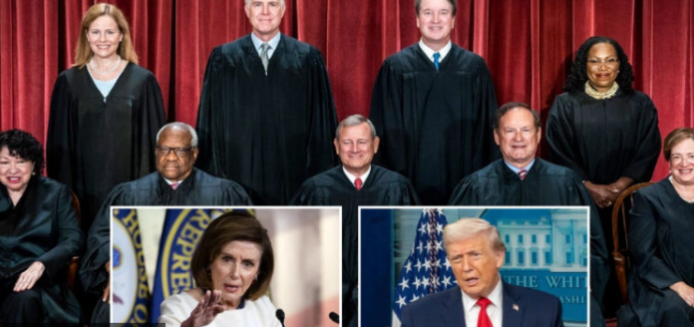
The Supreme Court of the United States issued a major decision on Wednesday striking down Louisiana’s congressional map, while also placing new limits on how race can be used when drawing district boundaries. The ruling is expected to have far-reaching implications for future U.S. House elections.
Previously, lower courts had required Louisiana to create a second majority-Black congressional district in 2024 to comply with Section 2 of the Voting Rights Act of 1965, which prohibits practices that weaken the voting power of minority groups. However, state officials—backed by arguments from the Trump administration—challenged the revised map, claiming it constituted an unconstitutional racial gerrymander under the Fourteenth Amendment to the United States Constitution, which guarantees equal protection.
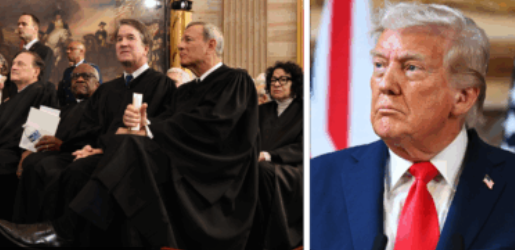
During oral arguments, principal deputy solicitor general Hashim Mooppan argued that the creation of a second majority-Black district unfairly prioritized race. He suggested that if the same group of voters were white Democrats instead of Black Democrats, there would be no justification for drawing an additional district, framing the issue as unequal treatment based on race.
Roughly one-third of Louisiana’s population is African American, and currently, the state’s only two Democratic members of Congress represent majority-Black districts, while the remaining four seats are held by Republicans.
The Court first took up the case during its 2024–2025 term and, in an unusual step, asked both sides to reframe their arguments to address not only the 14th Amendment but also the Fifteenth Amendment to the United States Constitution, which bars racial discrimination in voting. This move was widely seen as a signal that the Court might scale back or reinterpret Section 2 protections.
The decision carries substantial political consequences. Voting rights advocates warn that weakening or eliminating Section 2 could give Republican-led legislatures more freedom to redraw congressional maps in their favor. Some estimates suggest that up to 19 districts could be reshaped in ways that advantage Republicans, potentially influencing control of the House for years.
At the same time, it remains uncertain whether states will be able to implement such changes quickly enough to significantly affect the 2026 midterm elections, where Democrats are currently seen as having a strong chance to regain the House.
Chief Justice John Roberts, who authored the Court’s 2023 decision in Allen v. Milligan—a ruling that required Alabama to create a second majority-Black district—appeared focused on ensuring consistency with prior precedent. That earlier case relied on standards from Thornburg v. Gingles, which require plaintiffs to show that a minority group is large and cohesive enough to form a district and that voting patterns among the majority bloc typically defeat their preferred candidates.
Justice Brett Kavanaugh, who played a key role in the Allen decision, raised the idea of a possible “sunset” provision for race-based remedies under Section 2, suggesting such measures might only be appropriate for a limited time.
Civil rights groups, including Fair Fight Action and Black Voters Matter Fund, have warned that weakening Section 2 could entrench Republican advantages in Congress. Some analyses indicate that as many as 27 congressional districts nationwide could ultimately be redrawn in ways that favor Republicans, with 19 of those directly linked to changes in Section 2 enforcement.
Overall, the ruling is expected to trigger intense legal and political battles across multiple states, as lawmakers move to redraw congressional maps ahead of upcoming elections. The decision could reshape the balance of power in Congress and redefine how race is considered in American electoral politics for years to come.