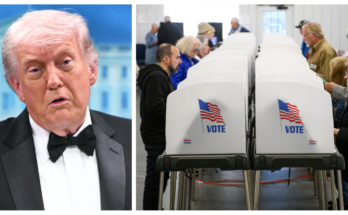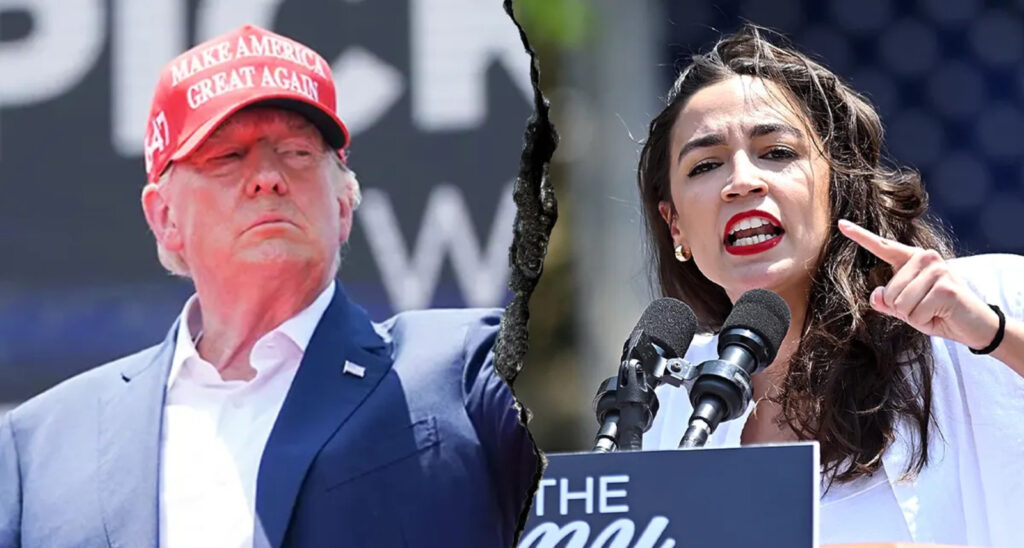
A newly released “Real Polling in Real Time” survey conducted by Zogby Strategies shows Democrats and Republicans running virtually neck-and-neck ahead of the pivotal November 2026 midterm elections, a development that could present growing concerns for the Democratic Party as the campaign season intensifies.
According to the latest Generic Congressional Ballot results from Zogby Strategies, Democrats currently hold 46.3 percent support compared to Republicans at 45.8 percent. While Democrats technically remain ahead, the margin is extremely narrow and falls well within the survey’s margin of error, effectively making the race a statistical dead heat.
What makes the findings especially notable is the sharp shift from the organization’s previous polling earlier this year. In February, Democrats held a considerably stronger advantage of roughly five percentage points. The latest numbers therefore suggest a meaningful tightening of the national political environment in only a matter of months, indicating that Republican momentum may be increasing as the midterm elections draw closer.
The poll has also generated significant discussion across social media platforms, particularly on X, formerly known as Twitter, where many political observers highlighted the results as potentially troubling for Democrats. Some users pointed out that Zogby has historically been viewed by critics and analysts as somewhat more favorable toward Democratic or center-left perspectives. Because of that perception, several commentators argued that a tied result from this particular pollster could signal a broader warning sign for Democrats nationally.
Beyond the topline congressional ballot numbers, the survey also explored which party voters trust more on major issues facing the country. Democrats maintained sizable advantages in several key areas. The party led Republicans by 14 points on healthcare, by 12 points on health and wellness issues, and by 11 points on trust in government connected to ongoing public discussion surrounding the Epstein files. Democrats also held notable leads on issues tied to economic fairness and worker concerns, including an 8-point advantage on addressing the needs of working-class Americans, a 7-point edge on affordability and cost-of-living issues, and a 6-point lead on supporting middle-class families. In addition, voters gave Democrats higher marks for handling concerns related to minimizing job losses linked to artificial intelligence and automation.
Republicans, however, maintained strong advantages in several traditionally important voter priorities. The GOP led Democrats by 10 points on crime and public safety, by 7 points on immigration and border security, and by 3 points on projecting international strength and leadership abroad. Republicans also held a small but noteworthy 3-point advantage on preserving the “American Dream,” a category often associated with economic opportunity, upward mobility, and national optimism.
Taken together, the poll paints a picture of a deeply divided electorate with both parties holding strengths on different issues, while the overall battle for control of Congress appears increasingly competitive heading into the 2026 midterm cycle.
📊 2026 Generic Congressional Ballot
🟦 Democrats: 46.3%
🟥 Republicans: 45.8%February poll – Democrats +5@zogbystrategies | 3/17-18 | 1,000 LV pic.twitter.com/GDovczLblH
— InteractivePolls (@IAPolls2022) March 23, 2026
The Republican National Committee recently took a major procedural step toward organizing what could become the party’s first-ever national convention held during a midterm election year, marking an unusual move designed to energize Republican voters and strengthen support ahead of the crucial 2026 elections.
On Friday, the RNC officially approved a change to party rules that would authorize Chairman Joe Gruters to convene a national convention outside the traditional presidential election cycle. Historically, national political conventions are held only during presidential election years, where delegates from across the country formally nominate the party’s candidates for president and vice president while also presenting the party’s platform and messaging to voters nationwide.
According to reports from Fox News, the Republican Party is now exploring the possibility of holding a large-scale convention-style event ahead of the November midterm elections as Republicans attempt to defend their majority in the Senate and protect their narrow control of the House of Representatives.
The idea of a midterm convention gained momentum after President Donald Trump announced in September that Republicans were considering such an event to showcase the administration’s accomplishments since the GOP returned to power in the White House. Trump and Republican leaders believe a nationally televised gathering could help rally supporters, boost enthusiasm among conservative voters, and shift media attention toward Republican policy victories.
The rule change allowing the convention was first adopted Thursday evening during a meeting of the RNC Rules Committee held at the party’s winter gathering in Santa Barbara. The following day, the full Republican National Committee membership voted unanimously during the general session to officially approve the measure, signaling broad support within the party for the proposal.
A memo obtained by Fox News Digital reportedly referenced plans for a possible “America First” themed convention-style gathering centered around Trump’s political agenda and campaign vision. The phrase “America First” has remained closely associated with Trump’s political movement and continues to serve as a core message for many Republican candidates and voters.
Speaking to reporters on Friday, Chairman Gruters described the possible event as a “Trump-a-palooza,” explaining that it would serve as a major platform to celebrate the administration’s accomplishments while promoting Republican candidates across the country. He emphasized that the gathering would not only highlight policy achievements but also energize the party’s voter base ahead of what is expected to be a highly competitive midterm election cycle.
Gruters stated that Republican leaders view the convention as an opportunity to showcase accomplishments on issues such as border security, economic policy, energy production, and government reform while presenting a unified message to voters nationwide. Party officials believe such an event could generate enthusiasm similar to a presidential campaign convention and potentially help Republicans overcome the political challenges that often affect the party holding the White House during midterm elections.
Despite Republican optimism surrounding the proposal, recent public opinion polling has continued to show President Trump facing relatively low approval ratings nationally. Several surveys indicate that many Americans remain dissatisfied with the administration’s handling of the economy, inflation, and affordability concerns, issues that are expected to play a major role in the upcoming elections.
Democratic leaders quickly criticized the idea of a Republican midterm convention. Democratic National Committee Chairman Ken Martin argued in comments to Fox News Digital that Trump’s declining approval numbers reflect broader voter frustration with Republican policies.
“Trump has historically low approval ratings because he has put America last, sold out working families to hand out favors to billionaires, and made life unaffordable,” Martin stated while criticizing the administration’s economic agenda and priorities.
Historically, the political party controlling the White House often faces setbacks during midterm elections, as voters frequently use the elections to express dissatisfaction with the current administration. Republican strategists, however, hope that a high-profile national convention during the midterm season could help counter those traditional political trends by increasing turnout among conservative voters and focusing attention on Republican messaging rather than economic concerns.
In a separate interview with Fox News Digital, Gruters emphasized that the RNC’s recent winter meeting demonstrated strong unity within the Republican Party behind President Trump and his political agenda. He said party leadership has been heavily focused on strengthening fundraising efforts, expanding grassroots organizing operations, improving voter turnout strategies, and protecting ballot integrity ahead of the midterms.
“We’re building the operation needed to protect our majorities and give President Trump a full four-year term with a Republican Congress,” Gruters said while outlining the party’s long-term strategy heading into 2026.
At this stage, Republican officials have not finalized the exact date or location for the proposed midterm convention. However, according to a Republican source who spoke with Fox News, the event would most likely take place alongside the RNC’s annual summer meeting, which is traditionally held in August.
Some political observers have also suggested that Democrats could eventually consider organizing a similar midterm convention-style event of their own in response to Republican efforts, although no formal plans have been announced publicly by Democratic leadership.