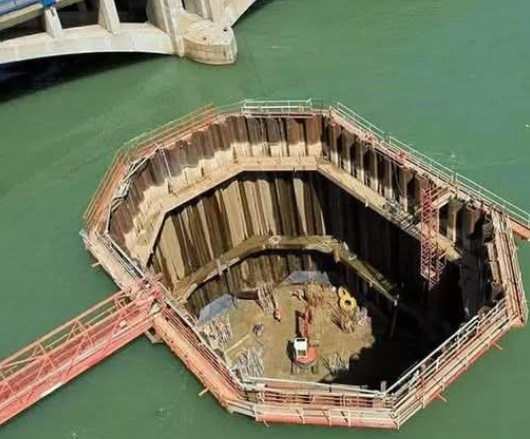
Bridge foundations built in the middle of rivers, lakes, and oceans are created using an impressive engineering method known as a cofferdam. A cofferdam is a large temporary watertight structure designed to keep water away from a construction site so workers can safely build massive bridge supports below the water’s surface. Without this technique, constructing strong and stable foundations underwater would be extremely difficult and dangerous.
The process usually begins with engineers carefully studying the location, including the depth of the water, the speed of the current, the condition of the soil, and the type of rock beneath the riverbed or seabed. Once the site is prepared, giant steel sheet piles are transported to the area and driven deep into the ground using heavy machinery and powerful hydraulic hammers. These steel sheets interlock tightly with one another to form a solid barrier around the exact spot where the bridge foundation will be built. Depending on the project, the cofferdam may be circular, rectangular, or even custom-shaped to match the design of the bridge pier.
After the steel walls are fully installed, engineers reinforce the cofferdam with internal braces and support beams to help it resist the enormous pressure from the surrounding water. In some cases, additional sealing materials are used to reduce leaks and strengthen the enclosure even further. Although small amounts of water may still seep inside, the structure is designed to handle it safely.
Next comes one of the most important steps: removing the water from inside the cofferdam. Powerful industrial pumps continuously drain the enclosed area until the construction zone becomes mostly dry. What was once part of a river or ocean floor is suddenly transformed into a temporary dry pit where workers and heavy equipment can operate safely. This allows construction crews to move around freely, inspect the ground closely, and begin the real foundation work.
Once the water is cleared out, excavation begins. Workers dig through layers of mud, sand, gravel, and loose sediment until they reach strong, stable soil or solid bedrock capable of supporting the enormous weight of the bridge. This stage is critical because the strength of the entire bridge depends on the stability of its foundation. If the ground underneath is weak, the structure could eventually shift or fail over time.
After reaching a solid base, engineers prepare the foundation area by installing large steel reinforcement cages made from thick rebar. These steel frameworks are placed carefully to strengthen the concrete and help it withstand massive forces such as heavy traffic loads, strong river currents, earthquakes, storms, and decades of wear. Massive amounts of concrete are then poured into the excavated area to create the bridge footing and pier foundation. In large bridge projects, thousands of tons of concrete may be used to form a single support structure.
The concrete is left to cure and harden over time until it becomes incredibly strong. Once the foundation is complete, workers continue building the bridge piers upward above the waterline. These piers will eventually support the bridge deck, roadways, rail lines, or pedestrian pathways that span across the water.
When all underwater foundation work is finished, the cofferdam has completed its job. The temporary steel walls, braces, and supports are carefully dismantled and removed piece by piece. As soon as the structure is taken away, water naturally flows back into the area and surrounds the newly completed bridge foundation. From above, it may look like the bridge support simply rises out of the water, but beneath the surface lies an enormous engineered foundation built through a long and highly precise construction process.
Cofferdams have been used for centuries and remain one of the most important techniques in modern civil engineering. They make it possible to build giant bridges across deep rivers, busy ports, lakes, and even open seas. Thanks to this remarkable method, engineers can safely create strong underwater foundations capable of supporting some of the world’s largest and most impressive bridges. 🌉🤩🤯🫠