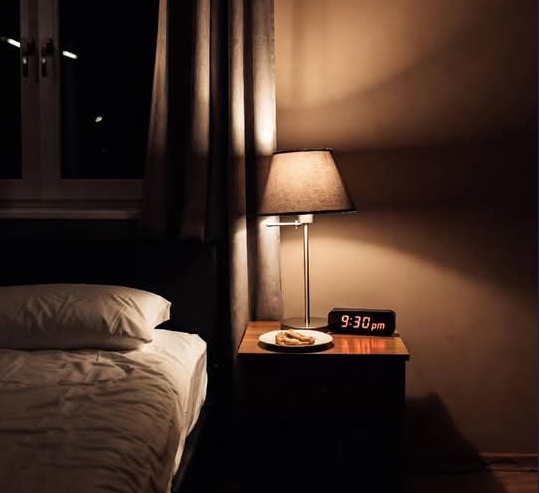
HOW TO SLEEP BETTER TONIGHT — 5 SIMPLE STEPS.
Step 1.
Avoid screens one hour before bed.
Your phone, TV, and laptop all emit blue light.
Blue light suppresses melatonin — the hormone your brain uses to prepare for sleep.
The problem is not just the light.
It is also the stimulation.
Scrolling social media, watching videos, replying to messages, or reading stressful news keeps your brain alert when it should be slowing down.
Your body cannot enter deep rest while your mind is still in “day mode.”
Instead:
• Dim the lights
• Put your phone away
• Read a book
• Stretch lightly
• Listen to calm music
Your brain needs a signal that the day is ending.
Step 2.
Keep your room dark and cool.
Sleep quality improves when your environment supports your biology.
A cool room helps your body lower its core temperature, which is necessary for deep sleep.
Around 18°C is ideal for many people.
Darkness also matters.
Even small amounts of light can reduce melatonin production and interrupt your sleep cycle without you realizing it.
Things that help:
• Blackout curtains
• Turning off bright LEDs
• Sleeping without the TV on
• Using dim warm lights before bed
Your bedroom should feel calm, quiet, and dark — like a recovery room for your body.
Step 3.
Avoid caffeine after 2pm.
Most people underestimate how long caffeine stays in the body.
Caffeine has a half-life of about six hours.
That means the coffee you drank at 4pm can still be active in your system at 10pm.
You may feel tired at night and still struggle to fall asleep because your nervous system is still stimulated underneath the surface.
And caffeine does not just affect falling asleep.
It also reduces deep sleep quality.
You may sleep for 8 hours and still wake up exhausted.
If your sleep has been poor lately, look at your afternoon caffeine first:
• Coffee
• Energy drinks
• Pre-workout
• Strong tea
• Soda
Many people blame stress when the real problem is hidden stimulation.
Step 4.
Try magnesium before bed.
Magnesium helps support relaxation and recovery.
It plays a role in regulating GABA — a neurotransmitter that helps calm the nervous system and prepare the body for sleep.
Many people are low in magnesium without realizing it.
Signs can include:
• Muscle tension
• Restlessness
• Night cramps
• Difficulty relaxing
• Poor sleep quality
Taking magnesium glycinate or magnesium citrate in the evening may help some people feel calmer before bed.
But remember:
Supplements support sleep.
They do not replace healthy habits.
You cannot out-supplement poor routines.
Step 5.
Pay attention to what you eat late at night.
This is the part most people ignore.
You can follow steps 1 to 4 perfectly.
You can:
• Turn off the screens
• Cool the room
• Avoid caffeine
• Take magnesium
But if you eat a heavy meal late at night, your body shifts into digestion mode instead of recovery mode.
If you ate a large plate of amala and soup at 9pm, your digestive system may still be working hard at midnight.
Your body now has to:
• Break down food
• Process calories
• Regulate blood sugar
• Manage insulin
• Handle inflammation from overeating
Instead of:
• Repairing tissue
• Producing growth hormone
• Recovering muscles
• Consolidating memory
• Entering deep restorative sleep
The digestive system and the repair system do not work efficiently at the same time.
When digestion stays active deep into the night:
• Sleep becomes lighter
• Heart rate stays elevated
• Body temperature increases
• Cortisol remains higher
And that is why many people wake up at 2am or 3am feeling restless, anxious, hot, or unable to fall back asleep.
The internet will try to sell you everything:
• A better mattress
• A sleep app
• Melatonin gummies
• White noise machines
• Expensive supplements
But none of them can fully override poor nighttime habits and heavy late-night eating.
Sometimes the solution is simpler than people think.
Eat earlier.
Keep dinner lighter.
Give your body time to rest instead of digest.
Because deep sleep is not just about how long you sleep.
It is about whether your body is actually allowed to recover while you are asleep.
Fix your nighttime routine, and your sleep often improves naturally.